Contact Us
Contact us


Emily Havard
October 22, 2026
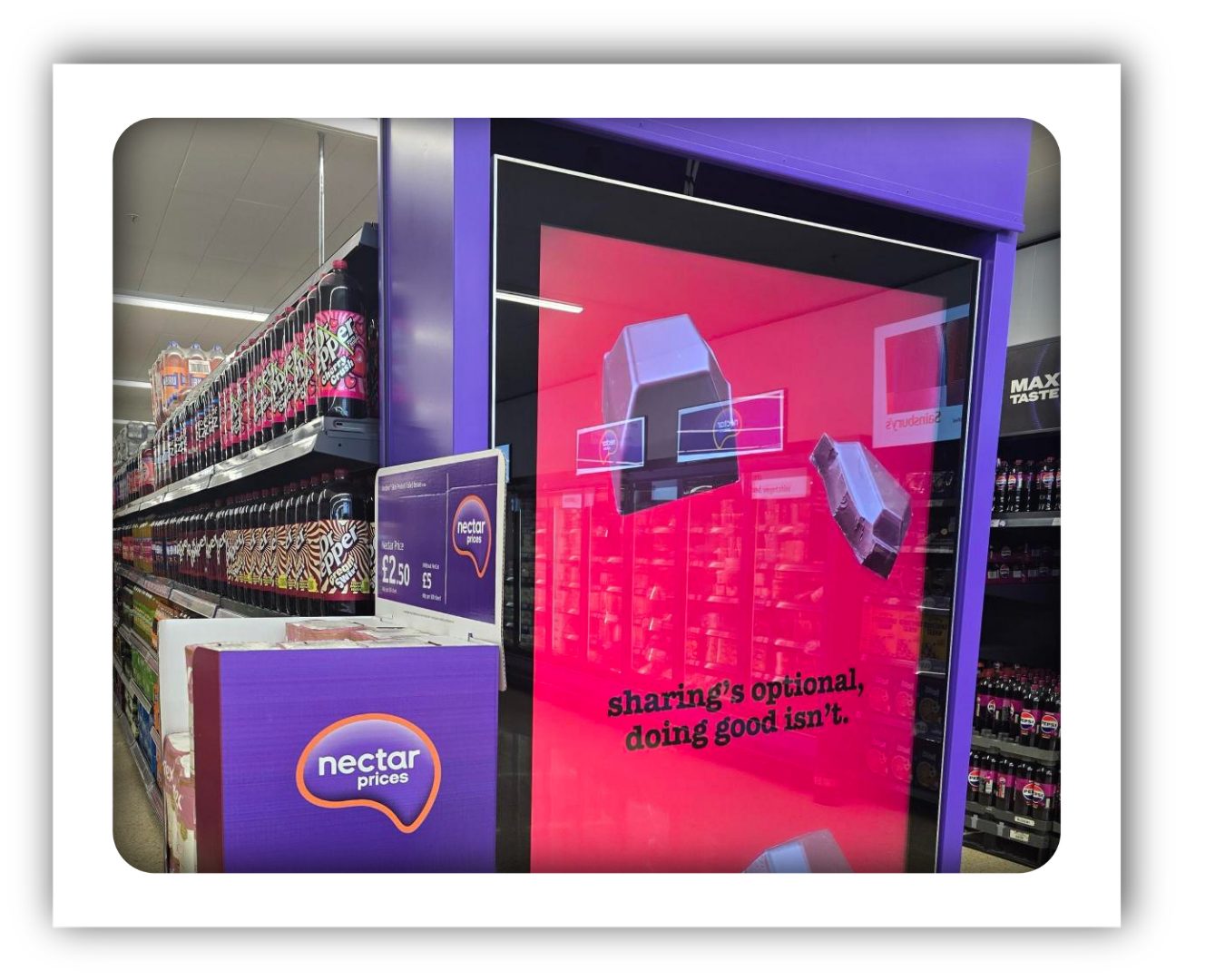
Working in point of sale, I often find myself noticing the details of a store while doing my own shopping. During a recent visit to the newly refitted Sainsbury’s at Leicester Fosse Park, one change caught my attention: the positioning of the advertising screens.
Rather than occupying the gondola-end product display area, the screens appeared to have moved to positions where I noticed them as I turned into the aisles.
As a shopper, they caught my eye more readily. From a retail perspective, the move also appeared to leave more room for merchandise on the gondola ends. It was a small change, but it raised an interesting question: how much difference can positioning make?
A screen can have strong content and a clear message, but shoppers still need to notice it.
On this visit, the positioning felt particularly effective because the screens came into view as I changed direction. I wasn’t deliberately looking for advertising; it appeared within my natural shopping route.
Research supports the importance of understanding that journey. A grocery-store study using eye tracking with 175 shoppers found that attention to signage differed depending on whether customers were navigating the store or making product choices. It also found that signage helped shoppers detect the products featured.
That doesn’t establish that an aisle turning point is always the best place for a screen. It does reinforce a useful principle for retail design: consider what shoppers are doing, and where they are looking, when they encounter a message.
The other benefit I noticed was the apparent opportunity to reclaim selling space.
Where a screen occupies part of a gondola-end display, there is less room available for products. Moving it to a separate position may allow advertising and merchandise to work alongside each other while giving each more space.
Gondola ends deserve careful consideration. A supermarket study comparing front and rear end-of-aisle displays found that their location affected sales performance. Rear displays generated greater total brand sales uplift, while front displays achieved higher sales directly from the endcap itself. Although this research examined product displays rather than screen placement, it shows how much the role of a display can depend on its position.
Freeing up shelving creates an opportunity to present more merchandise. Whether that translates into additional sales would need to be measured.
It would be easy to assume that a more noticeable screen automatically means more sales. The evidence is more varied.
Research into digital displays across different store formats found that results depended on the retail environment and the content shown, with minimal sales effects in the supermarkets tested.
Placement is therefore one part of the picture. The message, its relevance to nearby products and the surrounding store layout all need consideration.
For those of us working in POS, this is a useful reminder to look at a display from the shopper’s perspective.
Where will someone first see it? Which direction will they approach from? Does the installation make good use of the available space? Can the advertising remain visible while allowing products room to sell?
I don’t know the reasoning behind Sainsbury’s decision at Fosse Park, or its commercial results. What I can say is that the screens stood out to me, and the layout appeared to make better use of the gondola-end selling space.
Sometimes, a thoughtful change in position is enough to make us see a familiar retail environment differently.
Melita House
20 Centurion Way
Leicester
LE19 1WH
United Kingdom
0116 282 5665
info@melitagroup.co.uk


